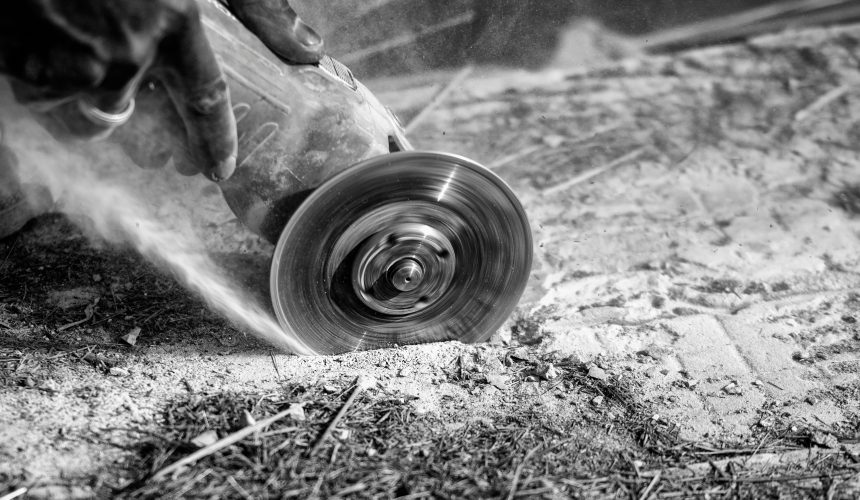
The Health and Safety Executive has issued a landmark announcement that will significantly impact businesses working with engineered stone. Following a rise in silicosis cases among young workers, the regulator has made it clear that dry cutting of engineered stone is no longer acceptable. Water suppression is now confirmed as the required control measure, and more than one thousand inspections are already underway across Great Britain to ensure compliance.
This is one of the most decisive interventions the HSE has ever taken in the engineered stone sector, and it signals a new era of enforcement, accountability, and worker protection.
Why This Matters: The Real Risks Behind Engineered Stone Dust
Engineered stone can contain up to ninety five percent crystalline silica. When cut, drilled, or shaped, it releases respirable crystalline silica dust, which is invisible to the naked eye and capable of causing irreversible lung damage. Silicosis, chronic obstructive pulmonary disease, and lung cancer are all linked to exposure.
Unlike natural stone, where disease may take decades to develop, engineered stone has been linked to severe illness in a matter of months or years. Two recent deaths of young workers prompted urgent calls for action from MPs, trade unions, and medical professionals.
The HSE’s research found that dry cutting exposes workers to silica levels five to ten times higher than wet cutting methods. With lower silica engineered stone now widely available, the regulator has made it clear that there is no justification for continuing unsafe practices.
What the New HSE Guidance Requires
The HSE has published its first ever COSHH guidance sheet specifically for engineered stone. It sets out exactly what employers must do to comply with the law, including:
- Switch to low silica engineered stone — reducing risk at the source
- Use on tool water suppression — dry cutting is no longer acceptable
- Control mist effectively — ensuring water based controls do not create secondary hazards
- Provide appropriate respiratory protective equipment — correctly selected, fitted, and maintained
- Carry out regular health surveillance — early detection saves lives
These are not recommendations. They are legal requirements.
With more than one thousand inspections scheduled between 2026 and 2027, the HSE has made its expectations clear: non compliant businesses will face enforcement action.
How MBO Safety Services Can Help Your Business Stay Compliant
At MBO Safety Services, we understand that regulatory changes can feel overwhelming, especially when they involve technical controls, health surveillance, and operational changes. Our role is to make compliance achievable, practical, and cost effective.
Here is how we support businesses working with engineered stone:
- COSHH assessments tailored to engineered stone: We ensure your risk assessments meet the new HSE standards and reflect the latest evidence on silica exposure.
- On site reviews of cutting and fabrication processes: We help you eliminate dry cutting, implement water suppression correctly, and control mist effectively.
- RPE selection, face fit testing, and maintenance programmes: We ensure your workforce is properly protected with equipment that meets legal requirements.
- Health surveillance arrangements: We work with occupational health providers to ensure your employees receive the monitoring required under the law.
- Training for managers and operatives: We deliver practical training on silica risks, safe systems of work, and legal responsibilities.
- Ongoing compliance support: We help you stay inspection ready throughout the HSE’s nationwide enforcement campaign.
- Our goal is simple: to help you protect your workforce, meet your legal duties, and operate with confidence.
A Turning Point for the Industry
The HSE has made it clear that the days of dry cutting engineered stone are over. This is a pivotal moment for fabricators, installers, and designers across the UK. Businesses that act now will not only protect their workers but also demonstrate professionalism and responsibility in a sector under intense scrutiny.
At MBO Safety Services, we are ready to support you through every step of this transition, simply get in touch with us on 08000 842 297 or info@mbo.ltd