
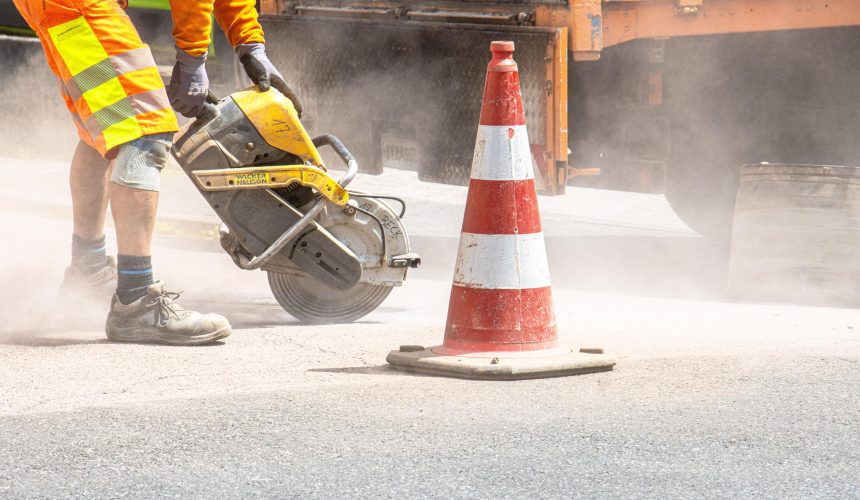
Silicosis remains one of the most serious occupational lung diseases in the UK. At MBO Safety Services, we work closely with organisations to ensure their workers are protected from exposure to respirable crystalline silica, which is the dust responsible for this entirely preventable condition. Silicosis develops when fine silica particles are inhaled deep into the lungs, causing inflammation, scarring, and long-term respiratory impairment. Once damage occurs, it cannot be reversed, which makes early intervention and robust safety management essential.
🏭 Industries Most Affected by Silicosis
Workers across several UK sectors face elevated risk due to frequent contact with silica-containing materials.
- Construction — Cutting, drilling, grinding, or polishing concrete, mortar, brick, and stone releases high levels of silica dust.
- Quarrying — Crushing and screening stone produces respirable crystalline silica that can easily become airborne.
- Foundries — Sand moulding and casting processes expose workers to significant dust concentrations.
- Ceramics and Pottery — Clay, glazes, and raw materials often contain silica.
- Mining — Excavation and drilling disturb silica-rich rock formations.
- Stone Masonry — Shaping and finishing natural stone creates fine dust that can linger in the air.
Across these industries, exposure often occurs during routine tasks, making proactive control measures essential.
🛡️ Preventing Silicosis in the Workplace
Silicosis is entirely preventable when employers implement strong controls and workers receive proper training.
- Risk Assessment — A thorough assessment identifies tasks that generate silica dust and determines the level of control required.
- Dust Suppression — Wet cutting, water suppression, and on-tool extraction significantly reduce airborne particles.
- Local Exhaust Ventilation — LEV systems capture dust at the source before it spreads.
- Respiratory Protective Equipment — Tight-fitting RPE, face-fit testing, and correct filter selection are essential for high-risk tasks.
- Health Surveillance — Regular lung function checks help identify early signs of respiratory issues.
- Training and Competence — Workers must understand the risks, safe working methods, and the importance of using controls correctly.
These measures align with UK regulatory expectations under COSHH and demonstrate a commitment to protecting long-term worker health.
🧭 How MBO Safety Services Supports Companies in Preventing Silicosis
At MBO Safety Services, we specialise in helping organisations build strong, compliant, and practical safety systems that protect workers from silica exposure. Our support includes:
- Workplace Assessments — We identify silica hazards, evaluate current controls, and provide clear recommendations.
- COSHH Documentation — We develop robust COSHH assessments and safe systems of work tailored to your operations.
- RPE and Face-Fit Testing — We ensure workers receive the correct respiratory protection and that it fits properly.
- Training Packages — We deliver practical, engaging training that helps workers understand risks and adopt safe behaviours.
- Ongoing Compliance Support — Regular reviews, audits, and updates to keep your organisation aligned with UK legislation.
Our goal is simple: To help companies create safer workplaces where silicosis is never a threat.
🔍 Key Takeaways
- Silicosis is a serious but preventable occupational lung disease.
- High-risk industries include construction, quarrying, foundries, ceramics, mining, and stone masonry.
- Effective prevention relies on strong controls, competent training, and ongoing health surveillance.
- MBO Safety Services provides expert support to help organisations protect their workforce and maintain compliance.
If you want to strengthen your organisation’s approach to silica safety, get in touch with us on 08000 842 297 or info@mbo.ltd